Weird Meat in Shanghai

“People will eat anything with four legs except a table,” says Jamie, our adventurous Shanghai guide who runs an amazing Weird Meat tour. “And they’ll eat anything with wings except an plane.”

There are some foods in China you’re unlikely to find on sale in your local supermarket. You’re not going to see ox penis in the meat section of Wal-Mart. There’s no McMonkey Brains on the menu of McDonald’s. And KFC haven’t yet discovered the delights of deep-fried honeybees. We asked Jamie, originally from Tennessee, to explain the eating habits of 1.3 billion people.

Were you an adventurous eater before you moved to Shanghai?
Just before I moved I remember my then-boyfriend teasing me and saying that I didn’t like Chinese food, that I would only eat egg rolls at Chinese restaurants in the US. Right off the plane in China we went out for dinner and an American-Chinese friend ordered the food. I think he was trying to shock us because out came this shrimp that was still alive. We also had bullfrogs, which are so bony and hard to eat. The next day I ordered noodles in another restaurant and they tasted a little off, so I was really scared of Chinese food at the start. But then I discovered dumplings and they’re like a gateway dish. I stole a menu from this little dumpling restaurant and it became my bible. I learned about Chinese food through eating dumplings.

What are some of the strangest foods you can find in Shanghai?
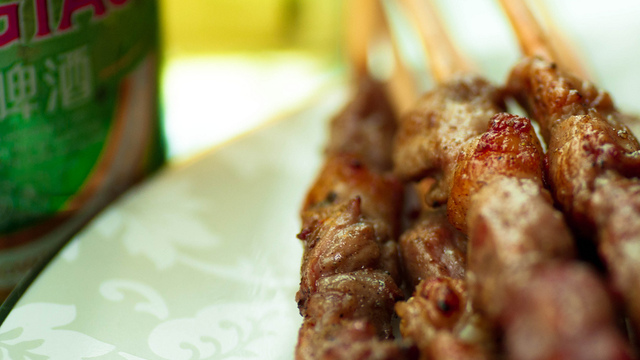
Oh, where to start? There’s scorpion on a stick, starfish, deep-fried honeybees, dragonflies - the wings get stuck in your throat - and snake, which is really good for you. In traditional Chinese medicine they recommend white meat and cold-blooded animals, so frog, turtle and snake are all supposed to be good for you.
Have you become used to eating such strange foods?
Eating live things was my only issue but I got my arm twisted into finally trying the drunken shrimp, which is served alive in a strong liquor, and it was surprisingly good. It’s amazing watching Chinese people pop entire shrimp into their mouths with the shell on it, and pull it out their mouth a few moments later without any meat left on the bones.

How do Chinese restaurant staff react to seeing your tours?
They love it. They welcome us into the kitchen, they’re very proud. But when I started they thought it was the weirdest thing ever. When Chinese people travel abroad they only eat Chinese food, so when they see Europeans and Americans eating their food they’re really surprised. They can’t understand why we’d do it.

Is there anything you won’t eat?
I’ve never eaten dog. But it’s not really a Shanghai thing. You’ll find it in the areas close to Korea and Vietnam.

What do you do when you have less adventurous people on your tours?
We always order some non-weird food for people who don’t want to eat strange meat. There’s something for everyone!
Atlanta’s hidden gems

“I’ve heard people say that so many times,” says Sara when I admit that the only thing I’ve seen in Atlanta is the airport. “It’s such a shame because there’s so much to discover here.” Here are Sara’s top ten tips for a trip to Atlanta:

1) The BeltLine
“The BeltLine is an old railroad that’s being converted into an urban park. It’s still in development, but already there is a paved section that’s several miles long and it’s a great place to head to on a nice day. The idea is that there will eventually be a trolley going round the city with lots of biking opportunities, cafes with patios and beautiful green spaces.”

2) Eddie’s Attic
“This intimate acoustic venue is in Decatur, a really fun neighborhood. Eddie’s Attic has good food, a great atmosphere, and every night there’s somebody really fantastic playing. The last great show I saw here was The Civil Wars - it was a really memorable concert.”

3) Sweetwater Brewery
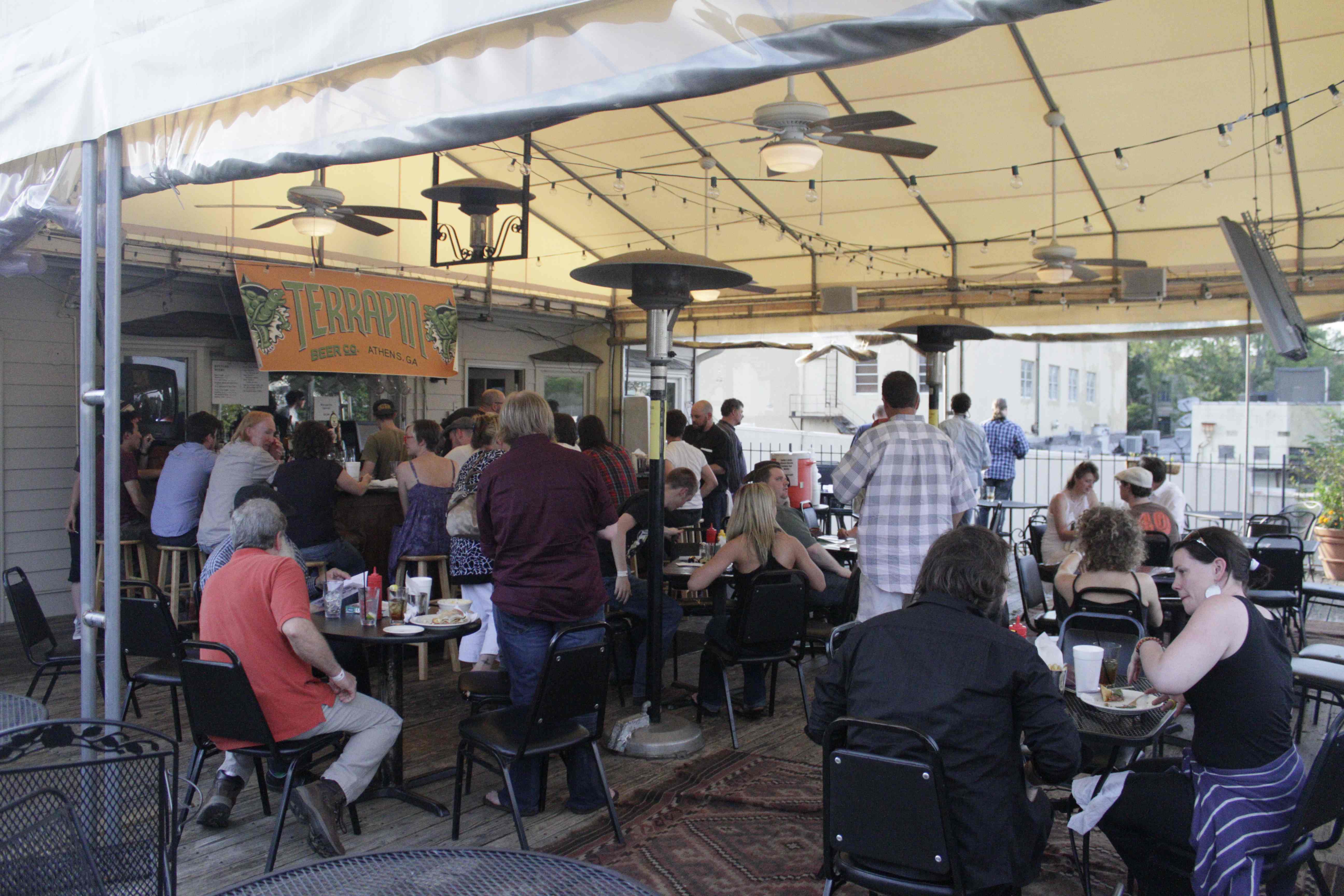
“This is our most popular local beer and they have a wonderful brewery space that’s open Fridays and Saturdays. They started really small and now you can find Sweetwater Brewery beer all over the country.”

4) Oakland Cemetery
“Oakland Cemetery is an amazing place to walk around and take pictures. There are so many interesting people buried here such as Bobby Jones, the founder of the Augusta golf tournament, and the views of the city are spectacular.”

5) Whole World Improv Theater
“Whole World is a comedy venue that’s been around forever. They’ve stayed in the same Midtown spot, just doing their thing, and the improv comedy is always great. Lots of talented local comedians and actors perform here.”

6) Fernbank Museum of Natural History
There’s always something interesting going on at Fernbank. I love their ‘Martinis & IMAX’ night - great cocktails and movies on the big screen.

7) Fat Matt’s Rib Shack
“Fat Matt’s has never changed over the years. It’s a real hole-in-the-wall place, a contender for the best BBQ in town. It’s only got about 15 tables so you have to squeeze in and there’s live music most nights. I always get the BBQ pork with coleslaw. And maybe a little sweet potato pie.”

8) Little Five Points
“This is Atlanta’s most eclectic neighborhood. It’s really music-oriented, there are plenty of tattoo shops, and it’s a place where anything goes. Don’t miss The Vortex, home to a great atmosphere and the best burgers in town.”

9) Clarmont Lounge
“The Clarmont Lounge is an Atlanta institution. It’s a crummy old hotel with a nightclub at the back. There’s a lounge bar that houses the city’s oldest strip club, and definitely the city’s oldest strippers - its unofficial motto is “where strippers go to die”. Of course it’s adults only and not for everyone, but it’s got so much character.”

10) The Swan House
“The Swan House is such a hidden gem. It’s attached to the Atlanta History Center, a coach house in the Buckhead district, which is known for its old money and big homes. It’s just an amazing place to go for brunch, lunch or dinner.”

The story behind FataLAtour

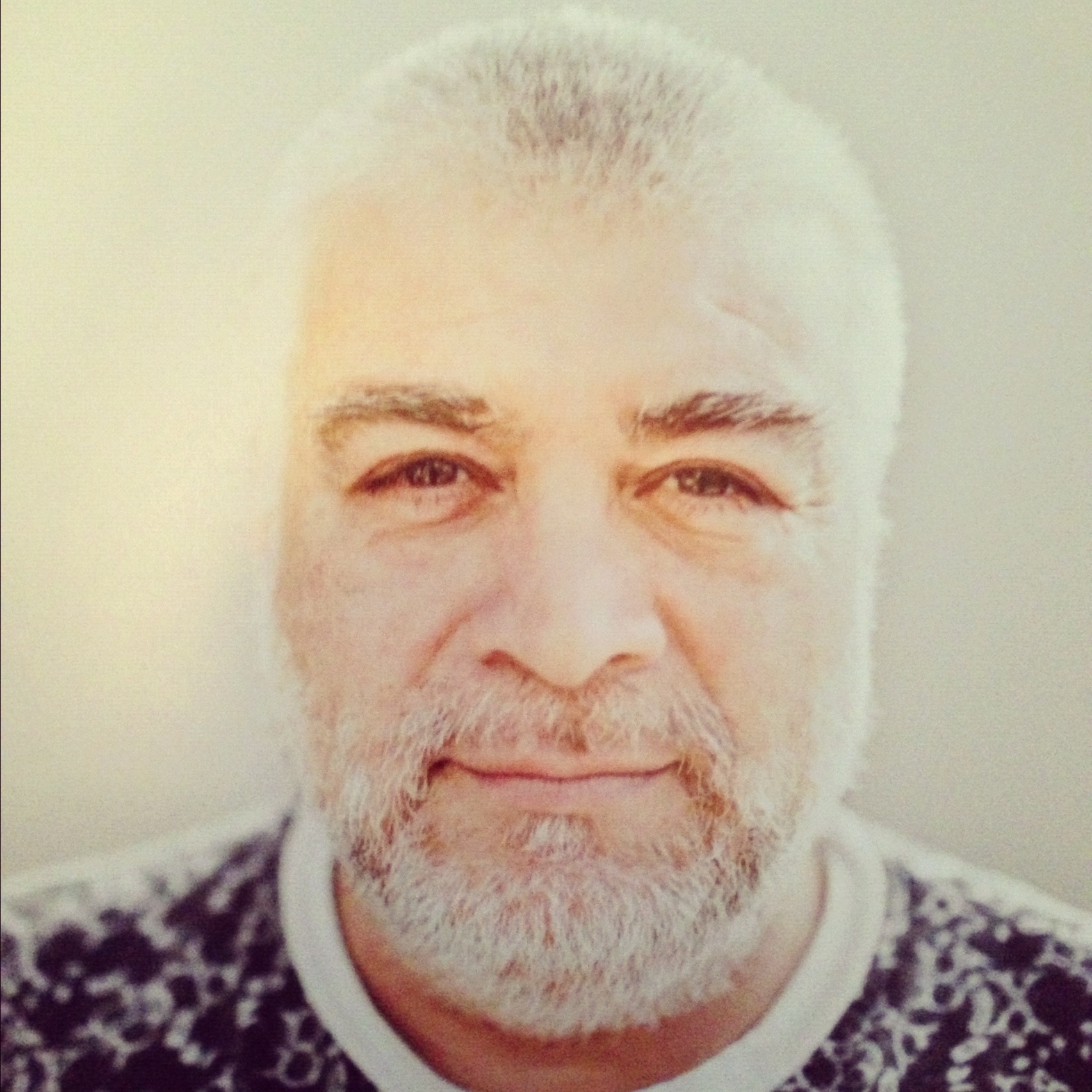
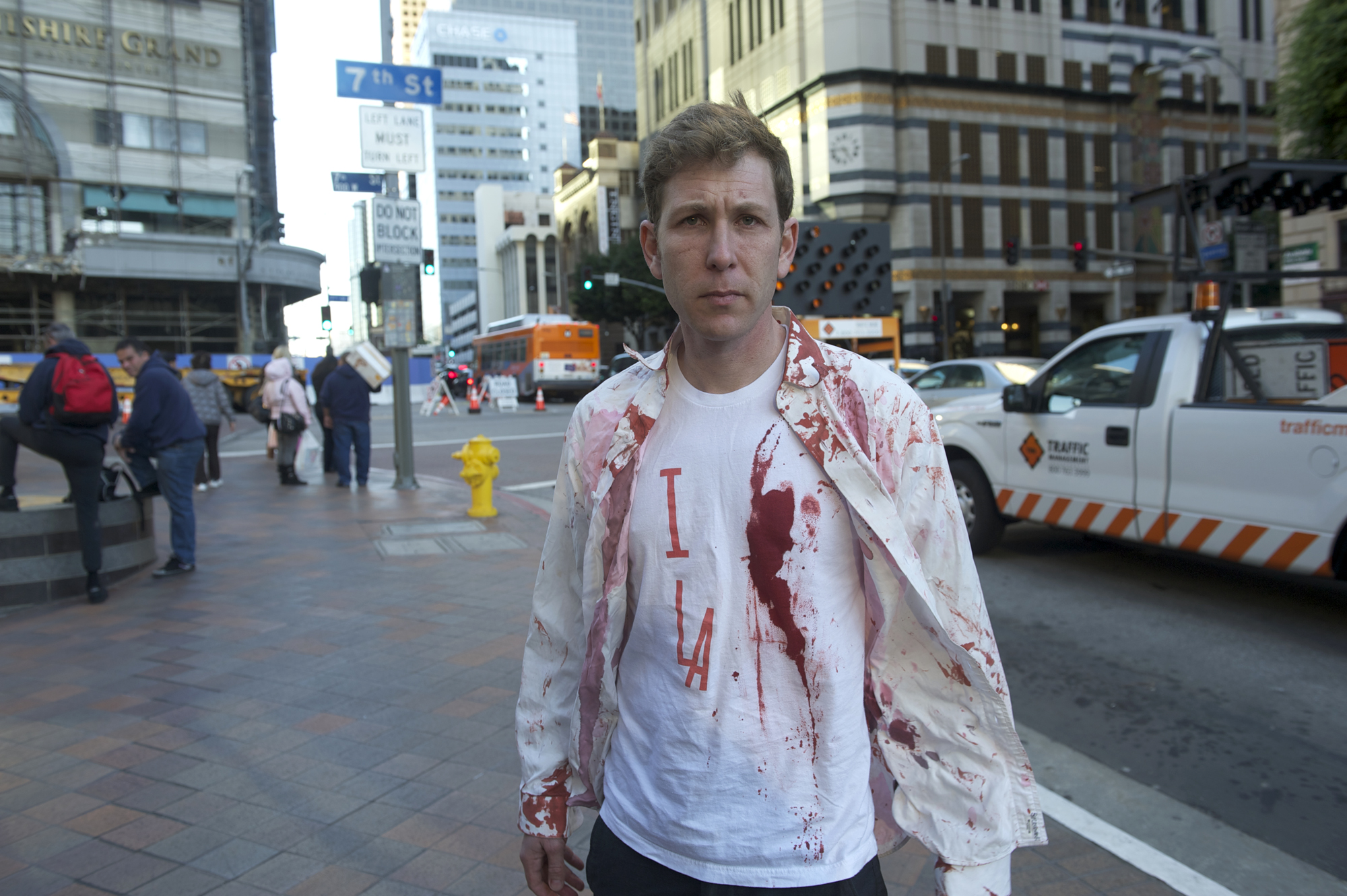
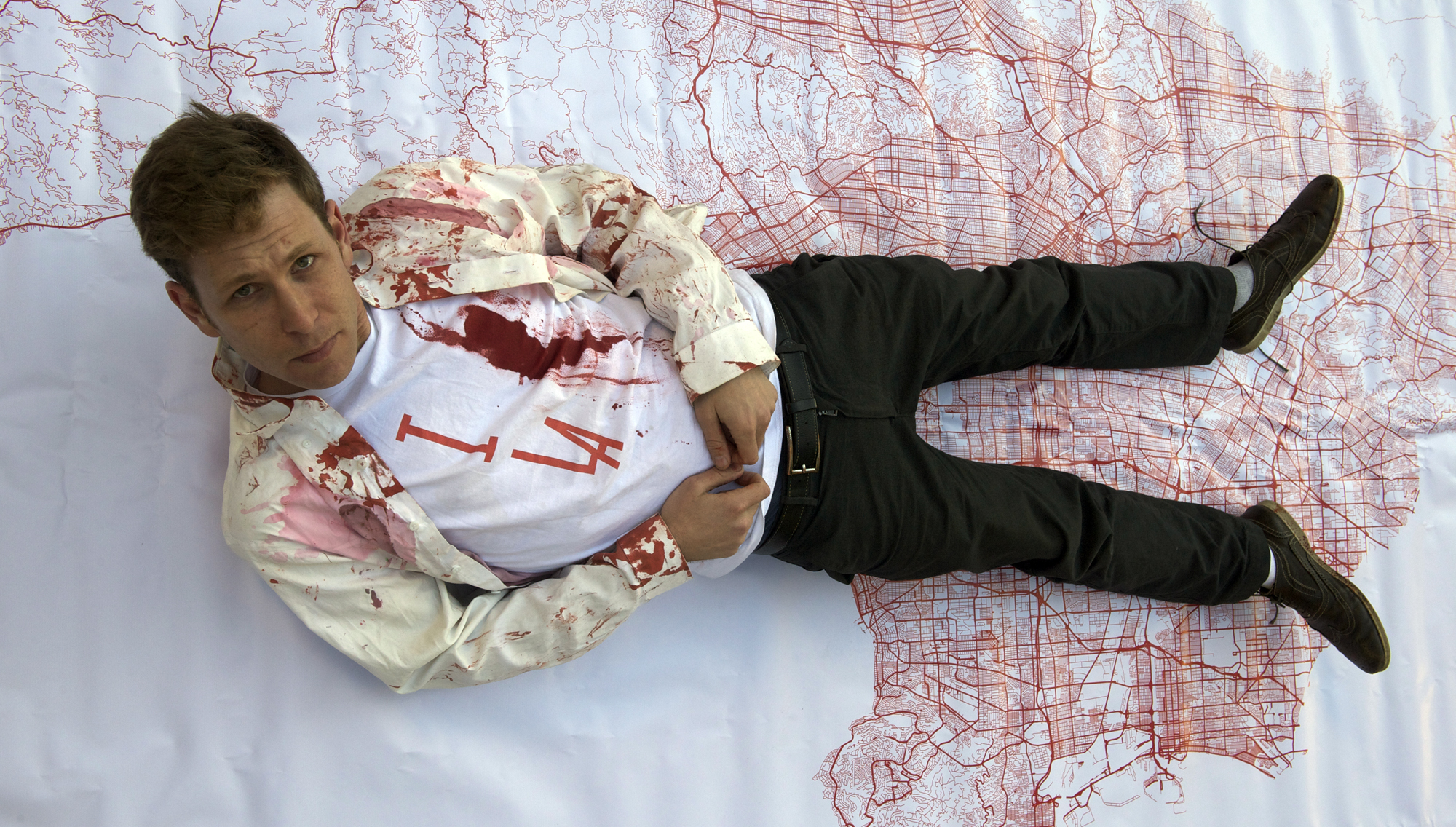
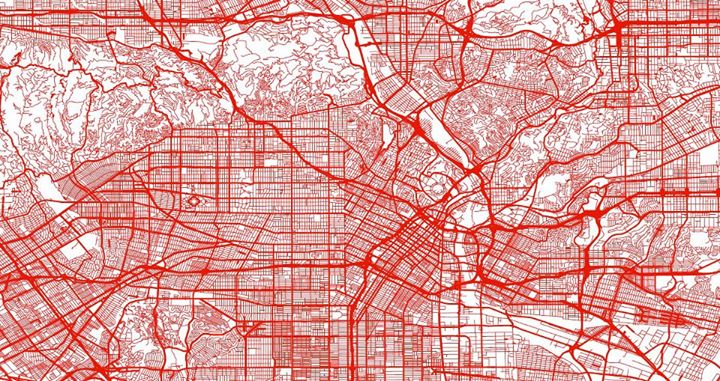
Vayable was created to be a marketplace for unique travel experiences, and travel experiences don’t get more unique than FataLAtour, a thought-provoking, fake blood-splattering tour of Los Angeles involving specially designed SFX packs and a beguiling blend of fact and fiction. Every time you walk past the location of either a real or movie murder, there’s an bang and a burst of blood. It’s hard to know what to make of it, so for the inside story we questioned its creator, David Leonard (pictured above)

Did your background as a photojournalist and reporter inspire the creation of FataLAtour?
When I was reporting at the scene of a crime, I’d feel an emotional connection. I left journalism to study design and media arts at grad school and I was using my computer to sort data on murders in Los Angeles, and I felt like I was disconnected from the reality of the murder. My thesis is in psychoactive geo-locative experiences, which is about how you can encode space with emotional content, and I started thinking about how I could create a narrative emotional experience with a mobile device; something that alerts you to your environment as you walk the streets.

What did your professors think of your idea?
They didn’t like it at first, they thought it was morbid. So I took a detour and focused only on movie murders, and the professors were happy. But why are people comfortable with Hollywood murders but can’t address real murders? So I merged the data together, real and imagined murders, and it’s interesting to see what happens when the line gets blurred. It’s a fine art-meets-technology project.

How do guests on FataLAtour respond to this unusual experience?
It really depends on the individual. Some people are looking to have a laugh while others have a very visceral reaction. Sometimes the journey raises issues that are very personal. I hope it helps people think about how Hollywood creates a picture of what a death is. In the cinema you’ll see so many images of violence, but people don’t like to hear about real violence. Our perception of reality is so altered by these simulations.

Is FataLAtour an anti-violence statement?
There’s definitely an anti-violence message in this project, but it’s more about investigating our relationship with death. What’s the relationship between death in movies and death in real life? While I’m totally against violence I recognise the reasons why people play violent video games, and new media offers a space to experience action at a heightened level, which can be exciting. I want to put people in the movies but I also want to put people in reality. In LA, real and imagined violence are so intertwined. It’s about trying to open up that space.

You use blood packs on the tour. Should people expect to get messy?
Definitely. I created the technology [which simulates the experience of getting shot] with Hollywood special effects people. They’re fully safe and I worked with Academy Award-winning SFX people.

What are some of the places you visit on the tour?
Downtown LA and Hollywood. Some people I’ll take on a driving tour. Sometimes Wilshire, sometimes South Central. It depends on the customer and what they want. Downtown LA is a really amazing place that people don’t really know about. It has been the set of so many great movies.

What’s the future for Fatalatour?
It’s still a labor of love, something I’m figuring out. I think this kind of immersive experience will be successful in the next few years. I’m working with augmented reality glasses to create hallucinogenic-like experiences on Venice Beach. Technology has been governed by engineers and programers who aren’t necessarily good storytellers, but that space is opening up to artists, to more edgy ideas. Technology is all bubblegum pop and we haven’t yet reached the rock ‘n’ roll phase. That makes me excited.

To check out the Fatalatour for yourself, you can book it here.
A different perspective on San Francisco

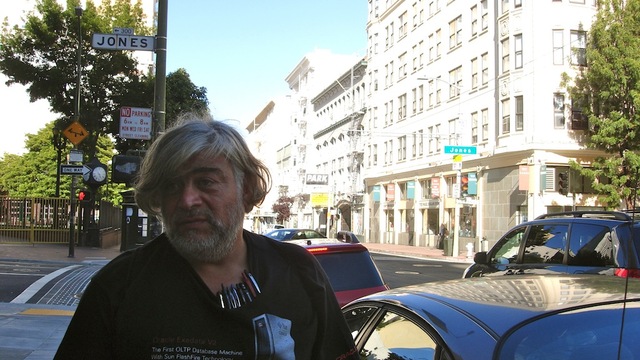
Milton’s Vayable experience in the Tenderloin was not my first homelessness tour. I’ve been on London walks run by Unseen Tours, a wonderful social enterprise which trains homeless people to become guides and earn an income showing people the city from their perspective. I was taken round east London by a man I’d walked past a thousand times; me en route to the office, him asking for change in the tunnels of the Underground station. I’d often wondered about who he was, how he got there, and how he survives. Going on his tour answered my questions and helped reshape my attitude to homelessness in London in a positive and constructive way. I’ve never knowingly walked past Milton (who also goes by the name Michael), but I was keen to meet him and learn about his situation.

IMG_2335

I’ve never been anywhere quite like the Tenderloin. At least not in a wealthy country. The Glide Memorial Church, where Milton is a regular fixture, hands out three meals a day to the Tenderloin’s homeless population. That works out at over 800,000 free meals a year, and when we arrive the line for food is stretching down the road and round the corner. As much as it’s unsettling seeing so many people prepared to stand hours in line, it’s reassuring to know that there are organisations established to help them.

Milton takes us on a walk round the Tenderloin. As a homeless man himself, he knows these streets and the people on them like the back of his hand. At one point, we see what appears to be the sale of drugs on a street corner and we wonder how this could happen so openly. Milton believes it’s due to an ongoing policy of containment. In other words, he believes law enforcement turns a blind eye to drug dealing and other social problems in the Tenderloin in order to contain them and prevent them spreading to wealthier, more touristy areas. If this is the case, it would make life easier for the authorities, but it doesn’t help those trying to combat violence, alcoholism and drug dependency among the Tenderloin’s homeless population.

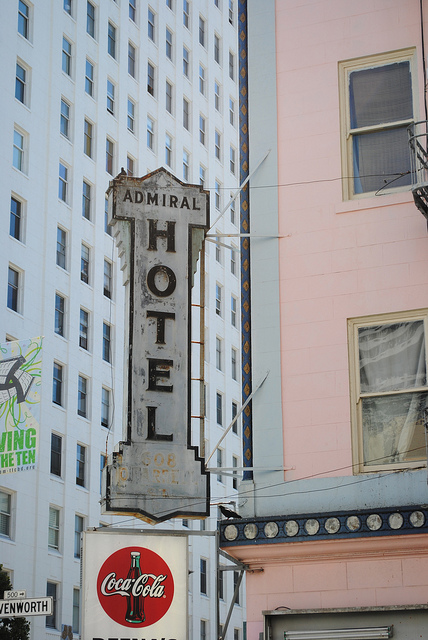
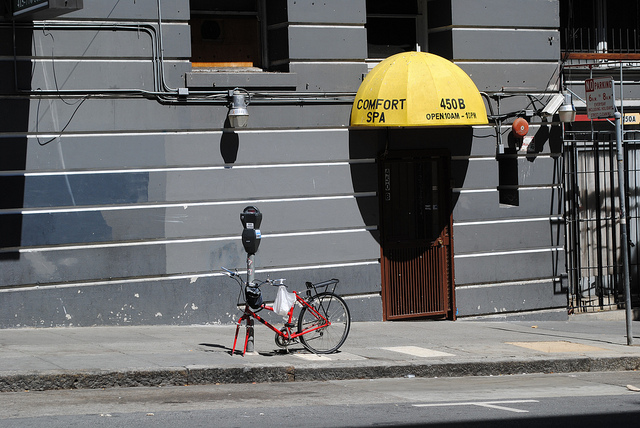
Despite its problems, the Tenderloin is definitely worth visiting (although some may prefer to avoid the area at night). It’s full of beautiful if dilapidated buildings and marvellous hand-painted signs. The Tenderloin played a large role in San Francisco’s music history (Jerry Garcia and Miles Davis played and recorded here); the city’s LGBT (lesbian, gay, bisexual and transgender) movement grew on these streets, and it was where many Vietnamese arrivals first moved to in the 1970s.

But the most memorable aspect of this Vayable experience is the guide himself. Some of Milton’s stories make for uncomfortable listening and I disagreed with some of his opinions. Some of his answers to my questions seemed to only raise more questions. But a homelessness experience in San Francisco is never going to be comfortable. It’s authentic and immersive, which means by its very nature it’s going to be challenging, provocative and occasionally upsetting. Perhaps most importantly, it’s a tour that gives a person living on the margins of society a chance to tell his stories and make a bit of money. It’s an example of the Vayable concept really making a difference.
Tenderloin photos by Megan Amaral on Flickr.

The ghosts of Fort Pickens

It’s strange how people seem to love being scared witless when they’re on vacation. You can find ghost tours all over the world - we’ve even got a fantastic one in Buenos Aires, Argentina - but we’ve never seen anything quite like Terry’s Vayable experience in Florida. This isn’t just the chance to hear a few mildly scary stories. This is a man who says he hears the voices of the dead in the dark, damp corridors of a former US military fort, and that he’d like to share them with you. Naturally enough, we wanted to find out more…

Tell me about your career as a broadcaster and a filmmaker.
Well I’ve been doing it for over 40 years now. I started in Philadelphia working on an FM station which was unusual because everything was still AM at the time. Over the years I travelled the world as a sub-contractor, working in both radio and TV, and I started a radio show called ‘The Lost Tracks’. We’ve been on a high of 180 stations around the world and done close to 400 shows. And I’ve also been making films all this time. We started our own feature film - it’s a comedy called ”The Last Ghost Tour’ and it’s coming out soon. There are some trailers on YouTube.

How did you first discover Fort Pickens?
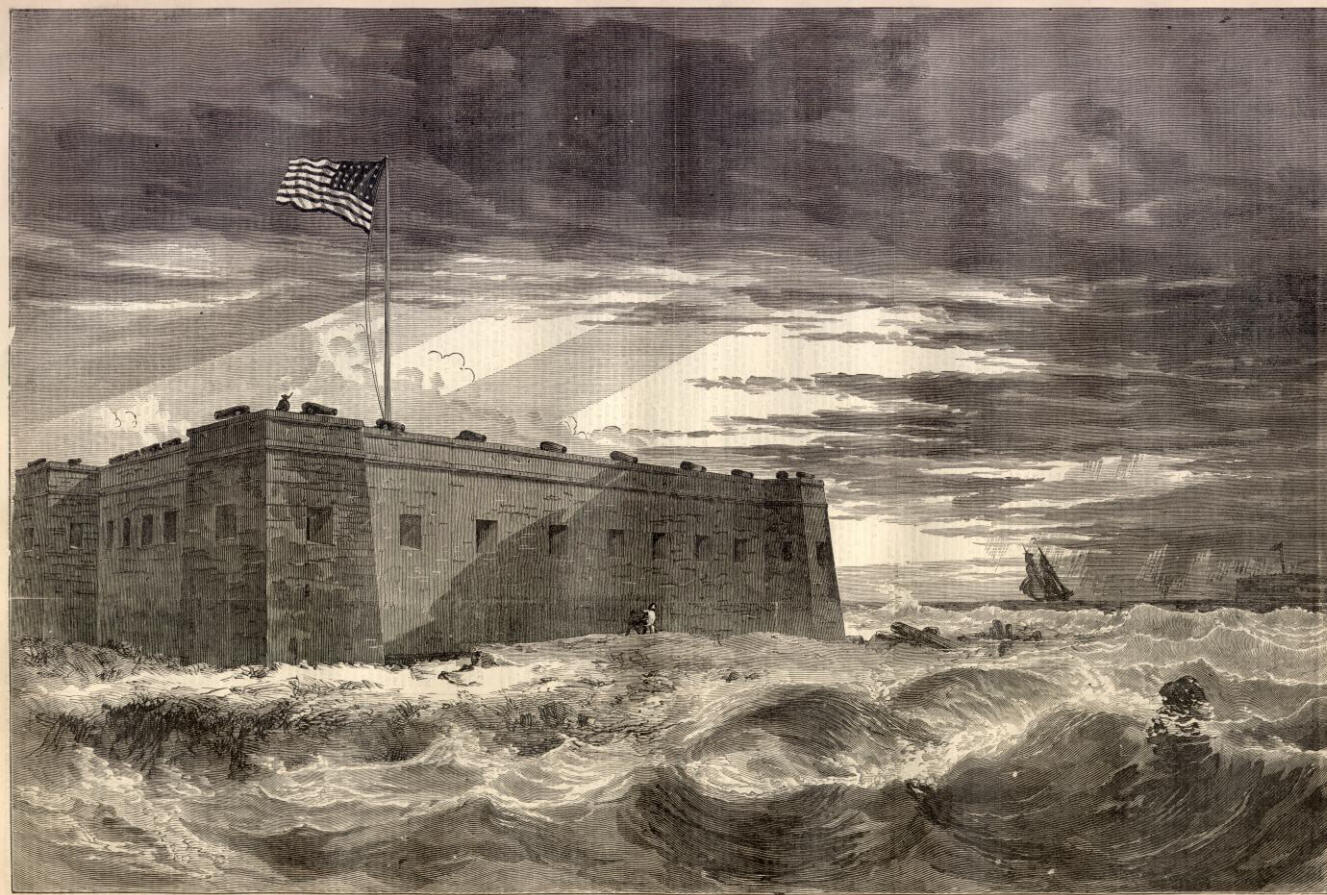
I got a job working part-time as a tour guide there. It was built from 1829-34 and right after the Second World War they closed it down for about ten years while they turned it into a national park. It’s one of the only forts in the south that remained in Union hands during the Civil War. There are a lot of great stories here, but people are most interested in the ghosts.

You also describe yourself as a clairaudient? What does that mean?
A clairvoyant is a person who can see clearly, and a clairaudient is a person who can hear clearly. It’s something I’ve developed over the past 20 years. Audio comes in very clearly to me. If you clear your mind, relax and filter out outside noises, you can peel back layers of noise and reveal other sounds. I was hearing radio broadcasts in my head that clearly weren’t from modern stations. I picked out some of the songs and commercials and they’re from the ’30s, ’40s and ’50s.

Where do these sounds come from?
Sometimes it sounds like they’re right next to you, like they’re having a conversation and I’m in the middle. Sometimes they’re at a distance and they’re yelling. I’ve heard some things that make me believe they can see me but I can’t communicate.

Will guests on your Vayable experience hear these sounds at the fort?
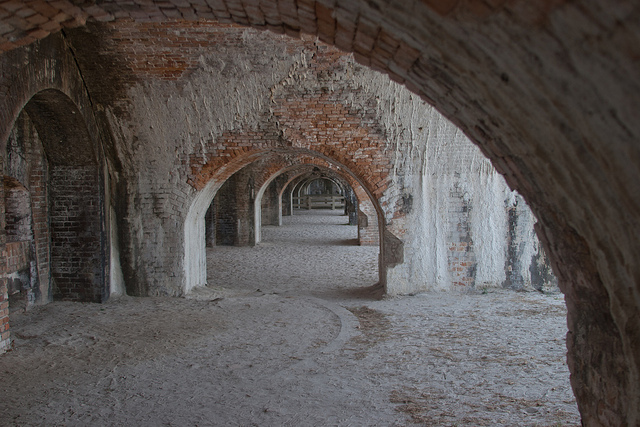
It’s difficult because Fort Pickens is a very noisy place - it’s at the tip of Barrier Island so there’s lots of wind travelling through the tunnels. But sometimes when we get rid of the noise I can hear crowds. I try and keep things in perspective and tell people what I’m hearing. Sometimes I hear voices commenting on the people I’m with, but it’s mumbled, garbled - it’s mostly noise and needs to be filtered. If you filter it out you can clearly hear people calling names. I’ve heard conversations between two or three people before. I’ve tried to point out these sounds to people I’ve been with and I’ve had people say they can hear them too.

Do you really believe there are ghosts at Fort Pickens?
I definitely believe the voices I hear are of people who have been at the fort at some time in the past. I hear a lot of conversations about supplies, eating, making fires, shelter, storms, and lots of good stories. On one occasion in the fort’s history there was an accidental explosion that blew out a section of the building. It was a huge explosion - people on the other side of the bay were killed by falling bricks. I’ve heard that explosion several times. In the right conditions you can literally hear that explosion. And I’ve heard other people say they’ve heard the explosion, too.

Great food cites: 2) Istanbul

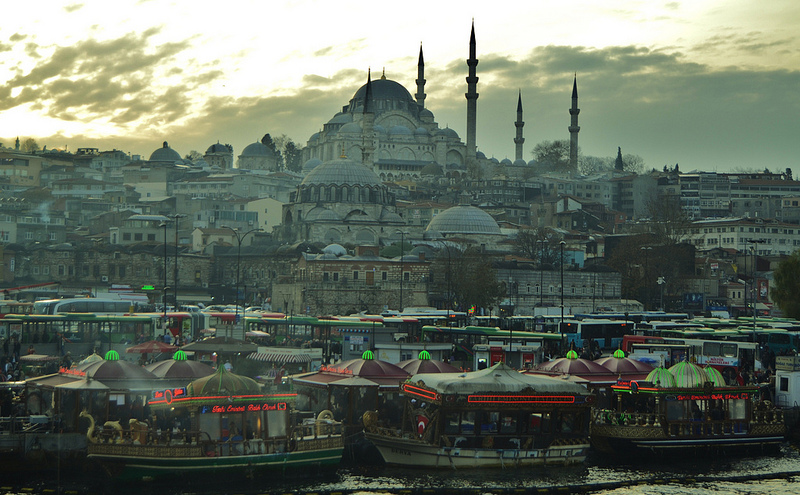
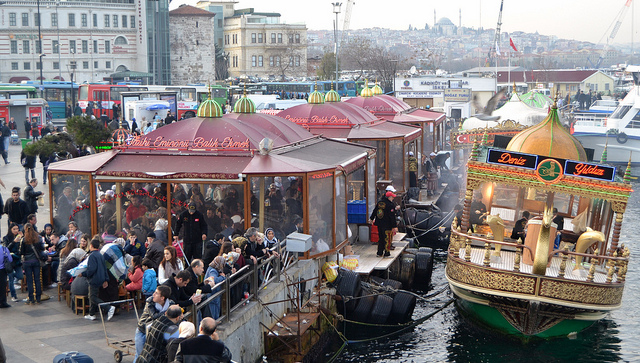
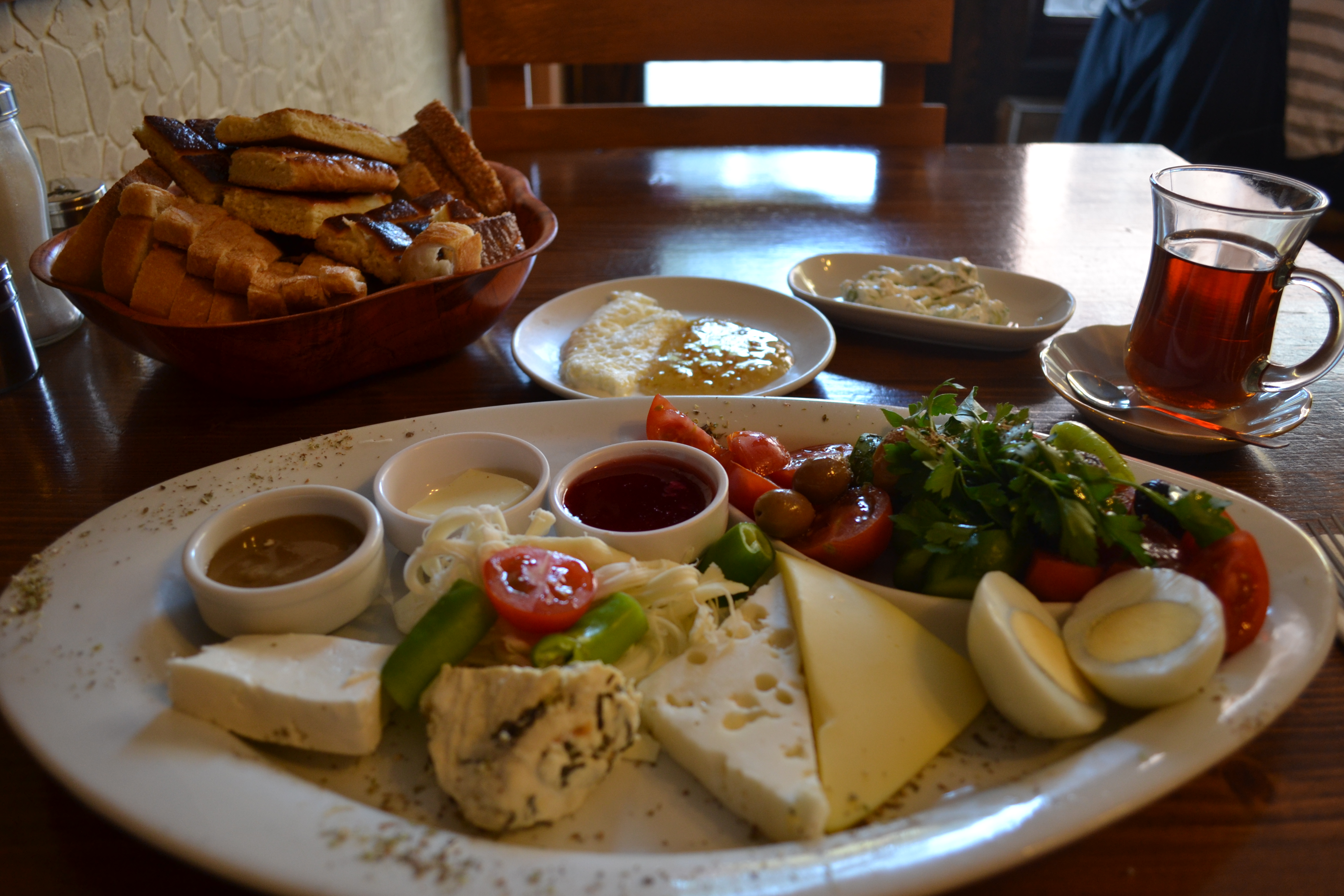
One of the most satisfying European eating experiences can be found a couple of metres from the continent’s eastern edge. Along the banks of the Bosphorus River, which separates Europe and Asia, kitchens on boats gaudily decorated in red and green neon prepare balik ekmek, a simple fish sandwich. For two or three dollars, you’ll get a grilled mackerel fillet stuffed in a crusty roll with lemon, spices and salad. Chow it down it on the Galata Bridge, halfway between the beautiful Galata and Sultanahmet skylines, standing next to local fishermen patiently waiting for some balik of their own.

It’s fun to watch the chefs do their thing on the sparkly balik boats, especially when the water gets choppy and they have to work hard just to stay on their feet. While these big boats with the big crowds are gloriously theatrical, the best fish sandwiches I’ve had were from smaller traders - men with portable grills cooking up the day’s catch.

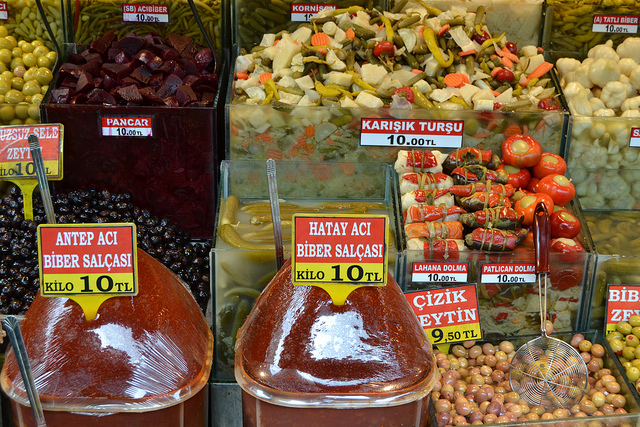
I love the food markets of Sultanahmet. They’re wonderful places for food geeks; you can spend half an hour here just sampling black olives or white cheeses from different parts of Turkey, learning about the subtle differences in production and taste. The quality of fresh produce here is unbeatable.

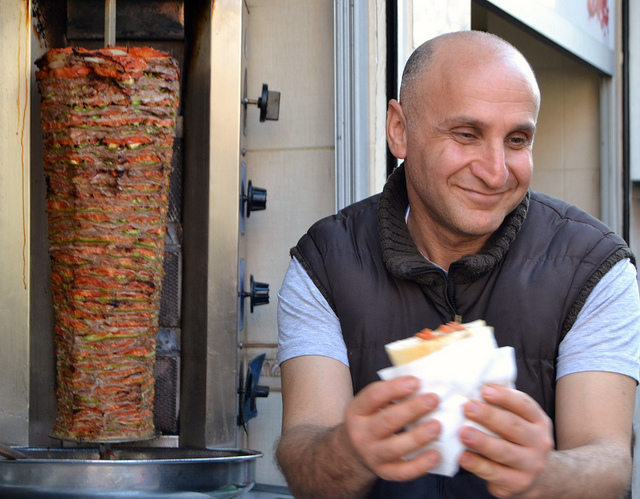
The döner kebap doesn’t have a great reputation in other parts of the world, but in Istanbul it can be elevated to an art form. This döner from a stall in Sultanahmet is completely natural, carefully prepared by hand every morning.

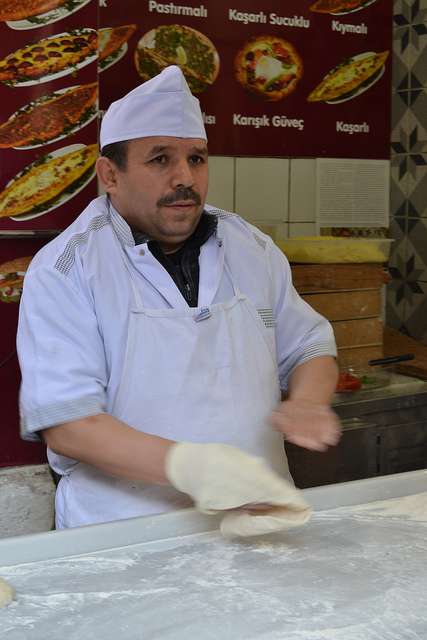
You’ll see pide, the canoe-shaped Turkish pizza, being made from scratch in hole-in-the-wall joints all over the city. It’s extremely cheap and really filling - one portion will often fill two people.

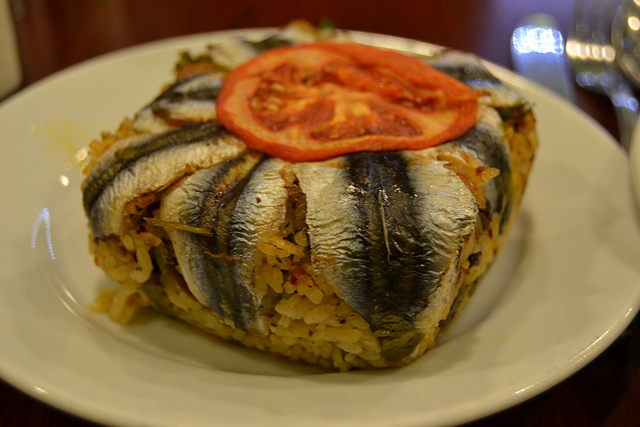
One of the joys of eating in Istanbul is the opportunity to discover the country’s incredibly varied regional cuisine. At a Beyoğlu restaurant called Hayvore, I found food from the Black Sea region, which has much in common with dishes from nearby Syria. This is hamsi pilav, a rich, fragrant dish of grilled anchovies on pilaf rice. Fall and winter is hamsi season in the south-east, and anchovies appear in hundreds of local dishes.

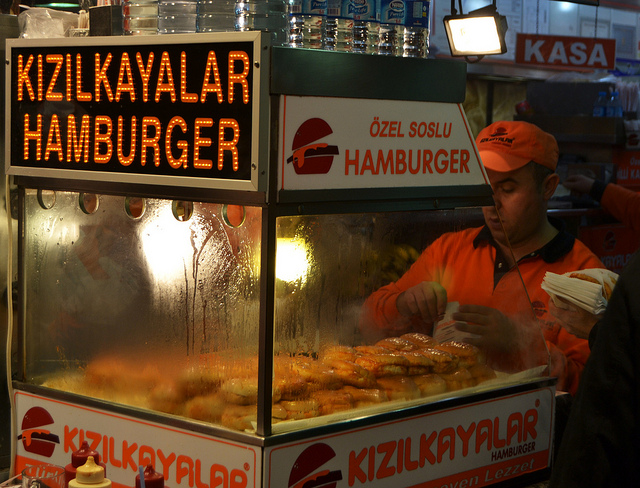
Most visitors will visit Taksim Square at some point because it’s at the heart of the city’s nightlife district, and most people will gasp with horror and incredulity at the infamous ‘wet burger’. It really is wet, dripping with condensation. It’s a love-it-or-hate-it thing - I personally can’t get enough of that moist garlicky taste.

Van Kahvalti Breakfast

But my favourite meal in all of Istanbul is the Van breakfast - and it’s encouraging to see Kasper agrees with me. He’s been taking people to the Van Kahvalti breakfast house - just check out the rave reviews! And for a different perspective on Istanbul’s epic food scene, hang out with Merve, who will take you on a tasting tour of Beyoğlu.

From Arrest to Appeal

Cows grazing in meadows, thousands of convicts overflowing from prisons, and mob bosses being thrown in jail aren’t the first things that come to mind when thinking of New York City. Yet this was once the norm in Foley Square in the lower Manhattan area that now houses the beautiful courthouses.

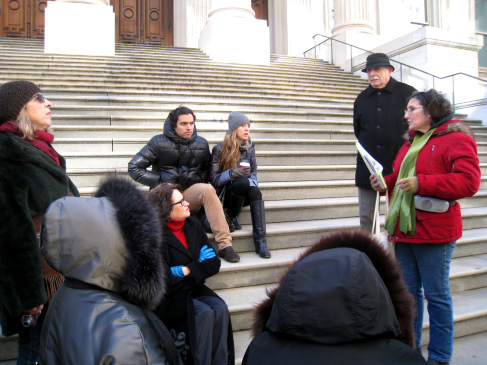
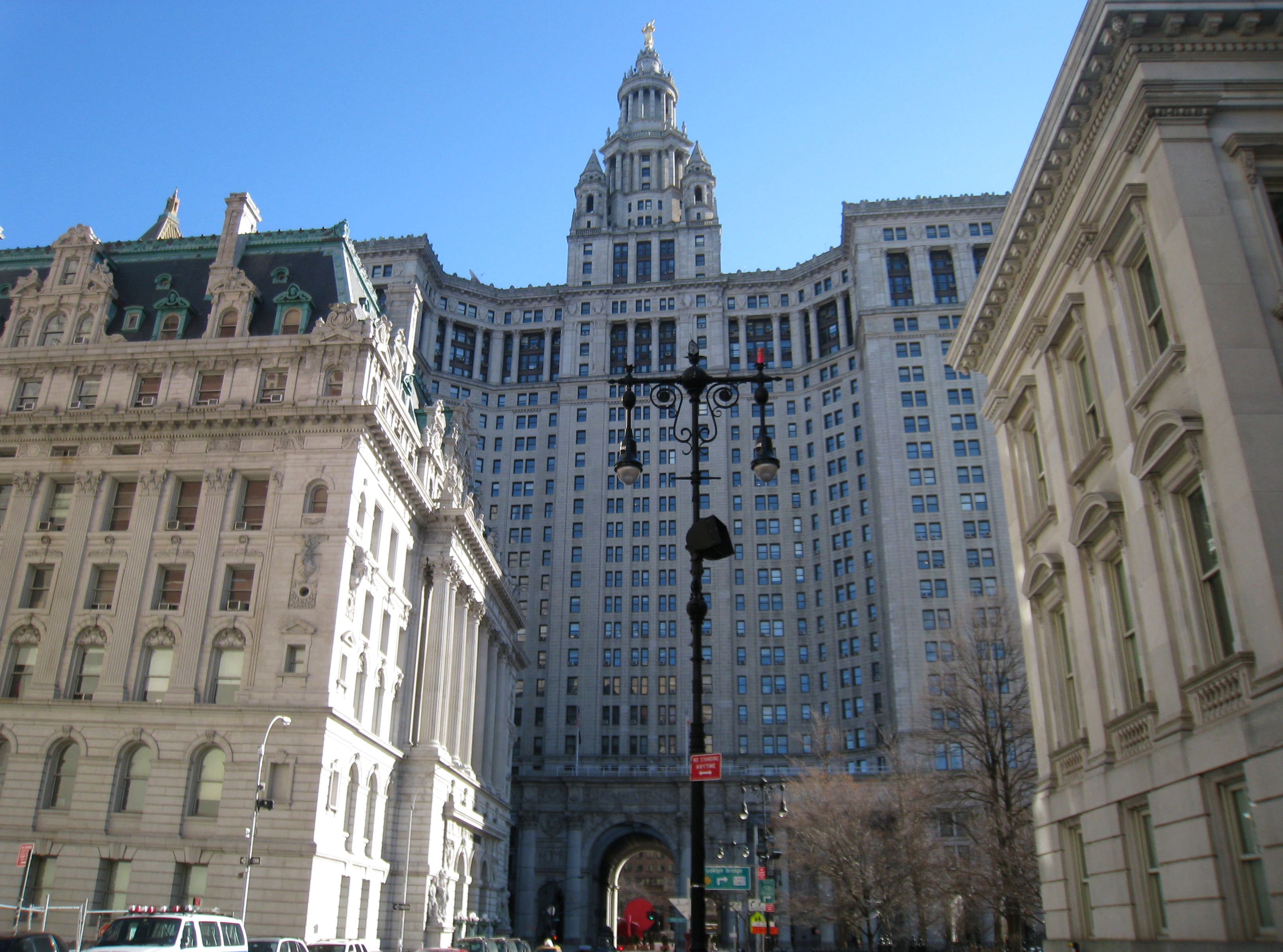
The neighborhood is made up of stately buildings with white granite exteriors interspersed with public sculptures and open green spaces. Linda, a court stenographer, convenes the tour at the Surrogate’s Courthouse. This court itself hides the meadows in which the cows once grazed in lower Manhattan.

Image

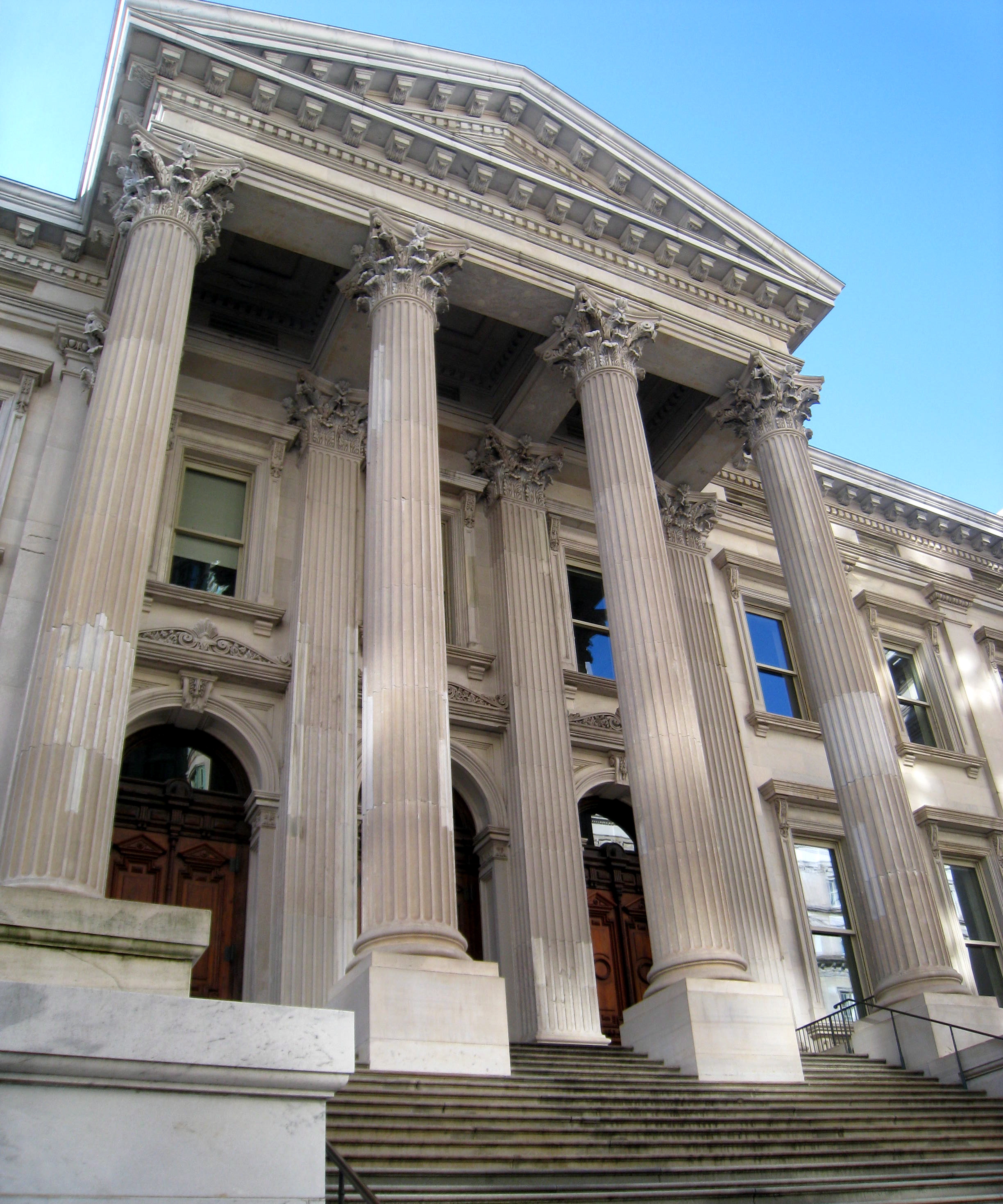
Continuing on to the equally impressive Tweed Courthouse, lined by ornate granite columns,we were shocked to hear the criminal history of this building that now upholds the law. Tweed Courthouse was first hometo a poorhouse and then a front for the famous mob boss, William M. Tweed, to embezzle millions of dollars. The buildings’ honor was reclaimed when the boss himself was tried and convicted within the very same building.

Image

We continued to the previous prisons and other remnants of Manhattan’s past, stepping inside a courthouse and even meeting a judge. Linda disclosed the inner workings of the court with which she is familiar with through her job. To gain a legal, historical, and even insider view on lower Manhattan, meet Linda at the Surrogate’s Courthouse.