The world is your playground.

Posts from the ‘Guest Posts’ category

Guide Story: How I Started a Non-profit to Benefit Local Communities in Panama

We recently got to know Joe, who runs Operation Safe Drinking Water down in Bocas de Toro of Panama! When most people think about Bocas de Toro, they think of white sand beaches, lush rain forests, and beautiful reefs. There are also indigenous villages scattered around the swamplands, many of which don’t have access to safe drinking water. We started Vayable to make it easy for tourists to benefit local communities while having fun on vacation, and Joe’s tour provides the perfect opportunity for that, mixing culture, food, and some ever-so-necessary beach time. All proceeds go to his non-profit.

by Joe B, Vayable guide and founder of Operation Safe Drinking Water. Here’s his story about how he got started!

In May of 2008 I was happily retired, playing golf in Costa Rica after
 40 years of aid work in troubled areas of the world. An old friend retired on an island in Bocas del Toro and invited my wife and I to visit him. After a day of relaxing by the beach, we went into town and met an American medical worker running a clinic nearby for the indigenous people. Seeing the condition of some of the people there, we were curious about how we could help.

“See this 13 year old boy?” he said. The boy was in abject misery from a horrible skin rash covering most of his body. “I treated him a year ago, now I’m treating him again. I’ll have to treat him again next year if he’s still alive. It’s bad water. I told him, but he said it’s all he has. If you want to help these people, help them get clean water. Medical care is a revolving door. Education means little to someone whose health is wrecked.”

My wife (Maribel) and I stayed on a few days and drank clean, safe water from a rain catchment tank.
 A few days later, we decided that I would trade my golf shoes for muddy boots, and Maribel would leave her family and friends in Costa Rica. We settled on a remote island, between two large indigenous villages, living “off the grid” like the people we came to help. Solar panels provided power, sometimes.

People came by dugout canoe night and day in search of her first-aid services. Snake bite victims were bundled into our boat for a risky nighttime dash to a hospital on the mainland. Being self-financed, we went the pro bono route to set up our little operation and become a 501 c3. We were an all-volunteer operation, and no one received a salary or compensation.

While my team and I installed rain catchment tanks, Maribel provided basic first-aid services.
 Soon, our efforts started to pay off. School principals began to report far fewer students absent from sickness a few weeks after our tanks were installed. Sickness rates of up to 70% dropped to less than 10%.

“Operation Long Reach” was launched to help the most distant schools. Tanks were taken deep into the jungle on narrow canals to remote villages, and we carried others up steep jungle trails to mountain-top villages alongside the men in the village. A Peace Corps volunteer told us of schools in urgent need of safe water on distant Peninsula Valiente, jutting far out into the sea. We traveled there in our small boat against high waves that beat us back several times and were able to provide all seven schools with their own rain-catchment systems.

We were thrilled to learn about Vayable, which helps to provide much needed funds to our organization by connecting travelers to our remote village. As a life-long world traveler I see 
it as an innovative travel break-through, with first class execution. 
Operation Safe Drinking Water is happy to be part of Vayable, and we hope many of you will come visit us.

-Joe
1 Comment

Walk Like An Egyptian

by Doug, a camel farmer based in Texas and Egypt. He offers 10+ day all-inclusive trips in Egypt, where you can live the local way of life and also explore the beautiful country.

Wasta is Arabic for “connections,” and I like to think travelers on my experience have wasta the minute they sit and eat with the Egyptian families on my guided tours of Egypt and Sinai.

In Cairo, we stay in the home of Adel Sayed Hamza, a ten-minute walk from the Pyramids, where Adel works as a camel man. Egyptian families are large and always expanding, so Adel and his wife Suad have a full house. Adel’s adult sons, Sayed and Mohamed, work with their uncle in an electrical business, while Magdy, the youngest son, is finishing up high school and wants to be a tour guide. Adel’s daughters, Hoda and Hebba, have children of their own, and Sayed’s wife, Wella, speaks perfect English, allowing female guests a real insight into Egyptian life. (She also loves Titanic and the Twilight series!)

During the day, while we’re out sightseeing with Adel, Suad is home preparing the night’s feast. Modern Egpytian cuisine traces its roots directly to the Pharaohs, so you can be sure you’ll eat like a king at each meal. Chicken, lamb, goat, fish and even camel can be prepared. Vegetarians needn’t worry; you’ve never eaten produce more varied nor fresher than that of Egypt, grown along the historic Nile.

While camel trekking in Sinai, you’ll be guests of Saleh bin Soliman, of the Muzeina Bedouin tribe. Saleh and his wife, Freija, have seven children and live in the small Red Sea town of Nuweiba. Saleh and family spend a good portion of the year in the interior of the Sinai desert, living among extended family in traditional goat hair tents. This is a lifestyle that truly hasn’t changed since the time of Moses and you’ll fall in to the Bedouin rhythm almost instantly.

With tourism slowing, Saleh and his sons make money by selling tea in roadside coffee shops, making charcoal from dead acacia trees, or offering their services as drivers. The daughters help their mother, Freija, tend goats and sheep to make textiles from the hair and wool of their flocks. These bags and rugs are sold and make great gifts while representing a way for traditional handicrafts to help sustain the Bedouin culture.

The impact your group has on Adel and Saleh’s families is real. In some cases it’s the difference between children in Sinai going without meat for one or two weeks at a time. In Cairo, many guests bring backpacks for school children or gently used laptops for young students. My reward? Getting to be the conduit, the go-between, facilitating your first steps as you learn to Walk Like An Egyptian.

Leave a comment

Spotlight on the World’s Best Oyster Bars

by Julie Q, oyster aficionado and Vayable guide. Check out her oyster blog at inahalfshell.com

A couple of years ago I had the very good fortune of traveling around the world for business. When the working day was done, I’d set out on my own to find the best oyster or seafood joints that I could find. Sure enough, I came across a handful that are worth sharing with you.

LONDON - Bentley’s Oyster Bar & Grill (http://www.bentleys.org)

I experienced some of the most flavorful and potent Flats (aka Belons) and Pacific oysters at Bentley’s. Jersey Coast’s are delightful (and they’re from Jersey island near Northern France, NOT Snooki’s Jersey Shore). Perch yourself at the bar and consult the shucker. He won’t steer you wrong with oyster and wine pairings.

Tip: On the menu, “Native” means they are wild (more expensive). “Rock” means farmed. They are sorted and priced by size, with the smaller numbers being larger (No. 1 and 2′s are perfect for a large oyster lover).

BRUSSELS - Belga Queen (http://www.belgaqueen.be)

With a large selection of oysters from Europe, Asia and America, Belga Queen excels in offerings and ambiance. The decor is opulent and chic, perfect for a leisurely evening with your favorite bon vivant friend. They primarily serve French oysters (loved the Fine de Clairs and Speciales Vertes) but also a few Dutch gems. If you have the budget, order a couple of each.

Tip: True to French style, the oysters will arrive still attached to the bottom shell. So before you try to sexily slurp it down, discretely detach it with your oyster fork before knocking it back.

HONG KONG - Oyster Station (http://www.oysterstation.com.hk)

This intimate seafood shack is made up of a small, festive bar and a couple of tables. The entire venue can only hold about a dozen people, max. The menu is worth the wait though — oysters are flown in regularly from Europe, Australia, and even South Africa! Must try’s are the Special Gillardeau, Namibia, and Tasmania (one of my favorites of all time).

Tip: Call ahead and ask about the specials. Some items must be pre-ordered. They usually have an amazing selection of fresh sea urchin, clams, and crab.

2 Comments

How to plan a trip like a foodie

At some point, we all find ourselves rolling our eyes at those self-proclaimed “foodies,” possibly one of the most overused ways of describing a person who just simply likes to eat. Jeffrey, however, has spent years deciphering the maze that is the Queens food scene. There are pockets of immigrant cultures in Queens that are not well-documented and where people don’t necessarily speak English, but against all odds, with his tendency to chase the unknown, he has made himself an adored part of the community there. Today he shares some tips on planning a regional food adventure… like a foodie.

by Jeffrey Orlick

I always look for regional foods. Things I have never seen before, and which I have no chance of seeing in my city. Sometimes this is difficult to draw out of people because they don’t always know that they are so different. For me, when people tell me about the ‘best restaurant’ in their city, I always balk. I’m never looking for their best. I’m looking for their soul! Here are some tips on how to plan a food trip!

Booking - Stay with a local. Couchsurfing or Airbnb. Airbnb gives you more privacy, but I always prefer to have a real life contact at least in the same building. Just booking it cheap isn’t the answer; you want to book for the guidance (hosts that seem particularly interesting and knowledgeable) and location.
Getting around - Research which travel companies drop you off at the most convenient location. Bus companies can be alarmingly cheap sometimes and are cool with bringing your bicycle. Other times, they’ll drop you off at a park ‘n ride miles from where you want to be. Trains can be alarmingly expensive and not necessarily a cheaper alternative to flying.

Planning - My secret to finding the good stuff is to always listen to EVERYONE. No one’s going to have the same tastes as you, so get as many opinions as possible.

  • Post in forums like Chowhound and Yelp - these are my go-to research centers. I also consult RoadFood, HollyEats, and UrbanSpoon if I’m not satisfied with knowledge. When looking on these sites, look at the ratings. If it’s either 5 stars or 1 star, read into the reviews to see if the 1 star people ‘just don’t get it.’
  • Check out local blogs, especially if you can make contact with the bloggers.
  • Ask for suggestions from your social networks. Tweet and mention your trip to everyone for weeks, and you might be surprised about what your friends know!
  • Map it out and cluster by region. You can get a good idea of neighborhoods and regions that are interesting by visualizing the concentration of places to hit. If you see clusters of small roads with medium sized avenues, there will probably be lots of random stopping points for you. It’s great to discover a place a bit serendipitously because it will not only be fun but also give you time to digest.
  • Find out hours of businesses and plan when to check out each distinct region.

Navigating - I print out my Google Maps and find a place to get free big maps. In NYC, it’s any bicycling shop. In other cities, you might go to visitors centers. These centers will give you all the dullard touristy places, but they’ll also have free maps with knowledgeable retirees who know how to get around.

Get yourself access to a bicycle. In most city centers, a bicycle is the quickest and least restrictive way to get around. A car is great, but you’ll never be able to stop at all the cool places you pass along the way without causing a major tourist traffic uproar, and you won’t have to worry about parking.

Eating - Make friends or order small. The worst thing that can happen is getting full. You are on vacation, so don’t feel pressure to finish your plate. It’s always the hardest part. Keep extra time between stops to digest and explore the neighborhoods.

Seem like a lot of work? Well, you can also book a tour from a local who already knows his stuff.

Leave a comment

How to Start an Urban Biking Lifestyle

As we near the end of National Bike Month, we hope everyone has gotten a chance to enjoy the joys of zipping through the city atop a two-wheeler. Biking is a wonderful way to get around town day-to-day, and Tim from Streets of San Francisco gives his tips on how to start out with biking! If you have more burning questions for him, you can meet him at our guide meetup next week!

by Tim McLaughlin

So, you want to ride a bike around your city, but you’re a bit apprehensive? Well fret no more, my friends, there’s a method to the madness. Urban cycling is easier—and safer—than it may at first appear. Here are a few tips to get you started on becoming the confident, joyous, and safe commuter you’ve always dreamed of.

Step 1: Realize there’s help and breathe a sigh of relief.

Your first step should be to research your local bike coalition. Most cities have them, and they typically offer courses (both in the classroom and on the street) on bike safety. These classes tend to be excellent and totally welcoming. So go ahead, ask that silly question you held back from your bike-y friends. It’s OK!*

Step 2: Practice!

You’ve learned some rules of the road, and now it’s time to put them into practice. If you’ve signed up for a bike safety course, you’re well on your way. But what if classes aren’t available to you? No problem. There are excellent practice areas somewhere in your city. For example, in San Francisco, these would include Golden Gate Park, along the Embarcadero (waterfront), or the quiet neighborhoods out by the beach. After you’ve gained a touch of experience, go on a guided bike tour of your city (if they exist). A guided tour allows you to learn the next level of safety while learning the best routes through your city. And you’ll learn some really cool stuff about your very own city (I guarantee!)**.

Step 3: Buy a bike

There is no magic formula to buying the perfect urban cruiser, so here are some folks to enlist in your search: (1) your bike-y friends, especially the ones that wear those goofy cycling caps and keep their pant legs rolled up at parties***. (2) Your friends who are also bicycle-curious. They’re doing their homework, too. Take advantage! (3) Your local bike shop. Find one that your friends trust and perform this simple test: Walk in and explain your situation. If the shop attendant gives you any attitude at all, turn around and leave. Find a shop where the folks are friendly, smile, and are totally non judgmental when they find you’re not all that into Italian-designed derailleurs from the early ‘70s.

New or used? If you want to actually adhere to your meager budget, a used bike is an excellent choice: it’s cheaper, less attractive to bike thieves, and probably has some rusty, scratchy character you can be proud of. Just make sure that your “new” used bike fits! If possible, bring a friend who understands bike sizing and can recognize a good value.

But wait, what kind of bike should you buy? For city riding, you want to keep an upright posture so it’s easier to see your surroundings. Hybrid bikes will certainly do the trick, but if you’d like a bit more style, look into the “European-style” city bikes that have have become so popular as of late (at least in the States, that is). Good city bike brands include Public, Linus, and Globe.

Step 4: Protect yourself

Folks, unless you are living in Amsterdam, Copenhagen, or a quiet Japanese village, you will need to wear a helmet. I totally understand that helmets lead to helmet head. Lucky for you, with urban cycling so en vogue these days, helmet head is quite simply all the rage. You may want to even accentuate it before that important presentation. Seriously, wear a helmet. Get one with a pink stars or a skull n crossbones on it. Own it!

Step 5: Protect your bike

Unfortunately, in most cities, bike theft is rampant. To deter your new love (or its parts) from getting stolen, you need a beefy u-lock and cable. Your newly formed friends at your local bike shop can help you get set up with all of this. Just be prepared for the sticker shock.

So, there it is, folks. Five steps to becoming a happy urban cyclist. I’ll leave you with this: remember how fun it was to ride a bike around your neighborhood as a kid? Yep, it’s still that fun!

* And don’t forget to become a member of your local bike coalition : )

** I co-own a bike tour company and this might be a blatant industry plug. Yep, pretty sure it is.

*** I keep my pant legs rolled up at parties.

Leave a comment

How to Immerse Yourself in New Cultures

Randy is a software developer who decided to pack up his life and move to Thailand after running a business for 10 years out in Los Angeles. In the beginning, he was a complete novice to Thai culture but over the past years, he’s learn to cook, talk, and walk like he’s Thai! He now shares his version of stunning Phuket with travelers who are lucky enough to book his experience.

by Randy, Vayable guide and software developer

I couldn’t even pick out Thailand on a map, let alone speak the language or understand the culture. My understanding of ‘Thai’ began and ended with a delivery of fried spring rolls and a ginger chicken dish to my Los Angeles home. I was as green as possible when I began a new life in the ‘Land of Smiles’ over 6 years ago.

Although there is a wide international culture living in Phuket, and English is widely used, I made the decision early on to immerse myself in Thai culture. Thai natives were so happy all the time, and I was determined to find out the key to happiness for myself. After 10 years of running a stressful business, my first goal was to get in shape and take care of myself. With an entirely different diet, work schedule, and exercise regime, I was able to turn my health around, giving me an entirely new energy for life.

I had my Thai friends take me to local outdoor markets where they shopped, showing me the amazing and colorful ingredients used to make some of the world’s best dishes. My friends taught me how to prepare and cook these meals which included delicious natural fruits, vegetables, and herbs that could satisfy all of my cravings without fat, preservatives and artificial flavors that often accompanied the food back home.

Because my friends were primarily Thai, I pushed myself to learn the language and asked them to speak to me in Thai as much as possible. Through a lot of patience and a few embarrassments, I have been able to pick up the language, and have began reading and writing some Thai as well. Thai people are incredibly respectful and willing to share their culture with others.

Thai culture has taught me to slow down, enjoy every day as your last day, and be happy with what you have. I try to continually push the boundaries of my comfort zone in order to be able to enjoy new experiences. Living in another part of the world has not only opened my eyes to new languages and food but also to entirely new ways of life. Now I want to share this new way of life with travelers who are lucky enough to visit my new hometown.

Leave a comment

Why Everybody Needs Some Vayable … and Italy More Than Most.

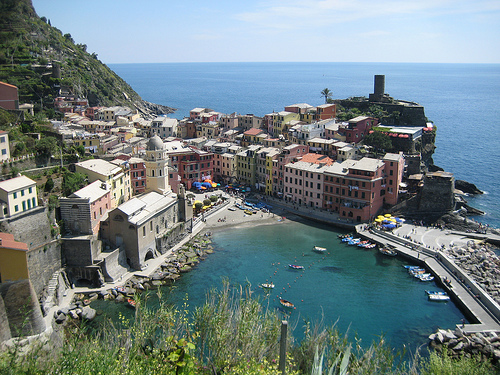
by Douglas, one of Vayable’s newest ambassadors hailing from the beautiful Cinque Terre region in Italy!

In a moment when everything seems to flit by us at the speed of a mouse-click, when information zooms past and relationships are sometimes reduced to nothing more than a “like” on Fb, the thing we all need to combat the sense of constant movement and uncertainty is passion … genuine interest and care in what you are doing, the spiritual activity of slowing down and really looking at what is going on around us.

Tourism is too often reduced to a checklist of things to see and places to visit, and once seen and visited, the experience they leave can be little more than a snapshot in a forgotten desktop folder. Paris: Eiffel Tower, Bateau-mouche, Notre-Dame, Louvre, Cafè les deux magots, Tuileries, shopping, home. New York: Empire State, Brooklyn Bridge, Statue of Liberty, MOMA, Times Square, Broadway, shopping, home.

What makes Vayable unique is its guides, who offer themselves and their passion as a new way to enter worlds that otherwise would be next-to-impossible for a tourist to find. It is precisely this passion that make Vayable experiences stay with you long after you have returned home. Vayable guides are not guides in the official sense of the word: they are people with other jobs and other pursuits who want to share their personal world with you. And as anyone knows, doing something for your boss and doing something for yourself are totally different things.

And now Vayable has come to Italy, a place that perhaps needs it more than others. Tourism in Italy, like much of contemporary Italian society, stagnates under the weight of history. Italy means old buildings, old paintings, old churches. The structure of Italian bureaucracy doesn’t help much either. Want to be a tour guide in Italy? First, go to the high school for tourism. Second, apply for your tourist license. Third, pass a test. Fourth, shell out fees and taxes to the state. Fifth, get registered in the Regional Registry. Sixth …. You can imagine how stultifying it all is.

But the relative anarchy of the internet, gently tamed by responsible sites like Vayable, throws out the rules. For all of the wonderfully inventive, creative, and vibrant young Italians who are going through a moment of social crisis as the older generation shows itself incapable of evolving for the future, sites like Vayable offer hope. It is an idea bound to grasp the imagination of young Italians.

And the winner of this is the tourist, who all of a sudden finds him or herself with a new choice, the choice of the genuine, true, authentic, passionate Italy, seen through the eyes of their Vayable guide. Benvenuti nel futuro.

1 Comment

On Being Inspired by the World Around You

“Travel is more than the seeing of sights; it is a change that goes on, deep and permanent, in the ideas of living.” – Miriam Beard

We’re inspired by the places we explore and the people that we meet there, and our guides feel the same way! Hannah, who organizes a Sunday Drawing by the Beach activity on Vayable shares her story about traveling to India and being inspired by the land, people, and energy of the world around her to create beautiful paintings (featured here in this post).

by Hannah, painter, model, interior designer, Vayable guide in the Los Angeles area

I came to India to travel and to visit my good friend, Lobsang, whom I’ve known for many years. He is a Buddhist monk from the region of northeast India between Bhutan and Tibet, called Tawang. I met him when I was in high school and decided to attend weekly Buddhist sanghas to deal with the pressures of being a teenager. He was always the friend who I would sheepishly go to with “what does it all mean” questions, and the friend I would proudly show off and introduce to my other high school friends as my very own “spiritual mentor”.

Lately he’s transitioned more to the role of “good friend” and “life-consultant”. A few years ago he built a school for orphaned children and village kids who live in extremely dire circumstances, deep in the foothills of the Himalayas, where he grew up. He wanted to provide for children who are living much the same childhood he led until he entered the monastery - a life devoid of parent figures, full of hard manual work (beginning at age 3), suffering abuse, starvation, and lack of any basic hygiene or health care. The school is located in an extremely tiny village with very few people, and is a three day drive from the nearest (slightly bigger village) over waterfalls - that’s right: real, gushing waterfalls which CAN kill you - and the broken down remains of old carrier trucks and military vehicles that did not make it over the narrow roads of the mountain pass.

I traveled to the school with a friend who was teaching English in Asia and wanted to join me in my journey. We intended to spend a week visiting and ended up living there for almost a month, teaching English, some art, some history, and helping to put on a sloppy, but cute Himalayan version of the Ugly Duckling. We also spent time with the live-in, resident teachers discussing their syllabi and the differences between an Eastern and Western approach to teaching and raising children. I think perhaps I learned more from them than they did from us!

The location was incredibly beautiful - saddled between Bhutan and the beginnings of the Himalayan steps toward middle Tibet, we were literally in the clouds. Sitting on the side of the hill, listening to the monkeys rustling the trees in the nearby jungle, watching the clouds slowly envelop the jutting peaks in the distance and smelling the nag champa incense burning for evening prayer (in English, Tibetan, Hindi, and the native language of Tawang), I truly felt that I was in Heaven.

I sketched the face of every kid at that school, but I did not truly start painting until I traveled back to grimy, hot, jungly, bustling Delhi. For me, Lobsang’s school was too perfect, too beautiful. It was the areas on the way from Bengal to Delhi and in western Rajasthan that truly inspired me to make paintings. There was something to the way people lived in these areas - literally on top of each other and yet, to some extent, in harmony. They bathed openly in the lakes surrounding tourist-ridden Jodhpur architectural ruins; they laid out fabric at night and slept alongside each other in groups of over a hundred on the train platform and shaved over the tracks in the morning while waiting for the express train.

The presence of people was everywhere: in the embers and smells of the burning trash piles on the corner of the street, in the Tibetan scrawlings on the side of a road-side shack from Kathmandu to Darjeeling, in the candle-lit Hindu altar seen through a crevice in the crumbling wall of the Red Fort in Delhi. And the colors were enough to throw my painter’s brain into a tail-spin. I feel sympathy for artists who visit this area of the world - there is simply TOO MUCH to take in. I fell in love with the orderly chaos of life in these places that I visited. In this work I want to show people a view of the world that may not be easy to look at, but perhaps is the best view for us to see.

Leave a comment

Some Tips on Visiting Paris

Paris on Demand helps you make the most of your trip to Paris. By suggesting workshops and designing custom-tailored itineraries according to your wishes and needs, it enables you to visit Paris with complete peace of mind. Here’s a guest post by the wonderful, Pierre, who runs the joint and offers tours on Vayable!

Thinking about your long-time dream trip to Paris? In order to avoid a strong cultural shock, here are some tips you may find helpful… When packing, some essential rules must be kept in mind in order to make your stay as pleasant as possible. To the astonishment of many tourists, Paris is a very small city compared to its European counterparts. It is about 8 times smaller than Berlin or 3.5 times smaller than London. Paris is thus a city made for walking. Don’t forget then to take sneakers you’re comfortable in as you may end up walking through Paris all the way down from Montmartre, its Northern boundary, to the Eiffel Tower with a stop at the Champs Elysees.

However, your sneakers won’t make you feel at ease in restaurants or any other places frequented by Parisians. Indeed, Parisians like fashion and style. Even though most of the designers at the helm of the top French-fashion institutions are no longer French, Paris remains the capital of fashion. Parisians like to be well-dressed and to make an impression wherever they go. High-heels are not mandatory but some elegant shoes may help you feel better. You may indeed get some dirty looks from “Parisiennes” who will take great pleasure in looking coldly and haughtily at you…

As you may have understood, Parisians will be an essential part of your Parisian experience… Dubbed as deeply arrogant and self-centered, a reputation that generally proves to be quite accurate, you may easily avoid them (unless it is the contrary…) but if you want to get in touch with them, it is better to learn the few essential words to make things easier… Parisians will indeed be happily surprised and feel compelled to answer you if you address them in French, even with a strong accent or grammatical mistakes. On the contrary, you will most certainly be ignored if your opening line is in English…

However, once you get used to Parisians’ lack of conviviality, you may actually find it fun to observe them. Their behavior seems to be an infinite source of inspiration for authors as they are the subject of an incredibly high number of books. Here is a selection of my favorite picks:

  • Stuff Parisians Like by Olivier Magny
  • Paris Revealed by Stephen Clarke
  • Talk to the Snail by Stephen Clarke
Leave a comment

Explorer Perspectives: Study abroad in college! Tips and experiences.

by Caryn

Hi, I’m Caryn from A Day in The Life. This post is part of a group of blogs participating in the 20SB Blog-Swap 2011. Be sure to check out June’s post on Life in New York on my site today!

If I have any advice for college students today, it would be to travel and study abroad. It was by far the best thing I did while in undergrad. There will always be classes you need to pass or credits you need to take to graduate but nothing surpasses the once-in-a-lifetime experience of living overseas, taking classes and traveling.

In January ’06, my second semester junior year, I packed my bags and moved to Florence, Italy for five months. I spent my in time taking classes and traveling. I even got credits that counted towards graduation! When classes were over, I traveled solo for a day or two to meet my friend from the states in Barcelona to begin our four-week backpacking exploration. Often times we saw cities by day and slept on overnight trains by night. Together we traveled to 13 countries: Spain, France, and Ireland, Northern Ireland, England, Belgium, Netherlands, Germany, Poland, Austria, Switzerland, France and back to Italy. I could write pages upon pages about each country I visited but that will be another day.

When In Rome… Warning, cars in Rome are crazy! Do not make eye contact with the driver or you will find yourself in a race for your survival to reach the other side. I saw cars and mopeds driving on sidewalks and speeding through very narrow cobblestone streets. There is even a name for the madness - Roman Roulette. You can’t escape art in Italy, it is everywhere; from the floors, the walls, the cracks in the walls, the ceilings, the fountains, and just about everything, is covered in art and/or sculptures. I can’t even describe the feeling you get when you walk into a vast room with nothing but intricate art and paintings from floor to ceiling. The architecture is like nothing I have ever seen before and everything is so rich with history. Nothing of the kind can compare in America.

Visiting the “Ghost Town”: If you go to Italy, I highly suggest making the trek to see Pompeii. Pompeii is a town near Naples that got buried in ash when Mount Vesuvius erupted in AD 79. I remember learning about this in history class, but to see it up close and in person was mind-blowing. People and objects were preserved just as they were at the time of the eruption. It continues to be the #1 most visited archeological site in the world. Pompeii reminds you that life can change in a split second and to enjoy the most out of it while you can.

Adventures in Switzerland: The first time I went to Switzerland I went night-sledding with a 106 fever and tonsillitis. I dunked my face in the snow and powered through it! Night-sledding is a night activity where you sled down a windy mountain playing follow-the-leader, except because it is night, you can only see the glow stick around the neck of the person in front of you. The second time I went to Switzerland, I returned on a mission. I wanted to Skydive! Yes, I jumped out of a plane at 1100 feet! The scariest part of the entire experience was the anticipation during the plane ride up to the jump point. And just like that it was over. The adrenaline kept me going for days and I felt like I had a permanent smile plastered on my face. It was the most natural high you can possibly experience. I have never felt more alive! I’d do it again in a heartbeat.

Lessons learned from studying abroad:

1) I had more of a culture shock returning to The States than I did arriving in Italy. In fact, I found myself a bit depressed for a few weeks upon my return. One thing I noticed is that everything in Europe is old, I’m talking centuries old, rich with history and art, while America is so young and modern and everything is new! In the life of history and cities, America is just a toddler. Columbus came to America in 1492 but Pompeii had already been destroyed centuries earlier in 49 AD. Crazy, right? As Americans, we think our technology is advanced, but man, are we wrong. Just look at ancient European cities like Rome and Pompeii. They didn’t have the machinery to build their homes and buildings, only slaves, yet they still stand strong today.

2) In Europe, everything is laid back and runs at a much slower pace. You have to ask for your check when you’re ready to leave a restaurant, they will not bring it to you. Everything is so fast paced in The States. Hurry here, do this, do that, fast food, the hustle bustle, urgent world of needing everything Now! is exhausting. This was really hard to adjust to when I returned.

3) America really is a super-sized country, both in our egos and our food. The thing about the food in Europe is that portion sizes are so much smaller. We have fast food joints on every corner in America. Our food isn’t as fresh and our single portions are enough to feed a family! No wonder we’re on the fast track to eating ourselves to death. It is beyond disgusting. Oh my mouth is salivating just thinking about all the scrumptious fresh food in Italy!

4) Talent and intricate art is everywhere there but nothing of today compares to the talent Michelangelo, Raphael or other Italian artists. In generations to come, what artist will we look back on and study?

5) Transportation in Europe is much easier and cheaper than in The States. I learned that it is possible for me to pack minimally and only live out of a backpack. I quickly learned there is something very freeing and liberating about traveling solo or even with a friend in a foreign country. I learned that I can get around Europe on my own. Knowing I could conquer obstacles and rely on only myself to get around was empowering, satisfying and a very rewarding experience. I learned a lot about myself, increased my confidence and helped me be more independent.

6) Have no regrets! I wanted to going skydiving but my travel buddy did not. We split up and each did our adventure activity that we wanted to do. I also wanted to visit Auschwitz so we took a train, hours out of our way, to make sure we had no regrets.

7) No education can teach you more about cultures and yourself than living abroad. I am a far more cultured and well-rounded person for having these experiences. The world has so much to offer, it is important to get out of your bubble and experience new places and things. Be sure to take these experiences by the horns and don’t be afraid to go for a ride of your life!

The Best Of – little pointers to help you on your way:

The Best Gelato: Gelateria on a street right off of Trevi Fountain called Della Palma Gelato Di Roma, in Rome, Italy.

The Best Pizzeria: Restaurant called Yellow Bar, in Florence, Italy.

The Best Weekly Music Bar: Bar called Be Bop with a Beatles cover band every Tuesday, in Florence, Italy.

The Best Most Authentic Italian Restaurant: (and most delicious) La Giostra, in Florence.

The Best Advice Regarding Travel: Travel is nothing like it is in America. Travel is a breeze in Europe. Use trains and cheap airlines (as low as $10!), however, avoid Ryan Air at all costs. It is okay to be spontaneous and last minute.

The Best Kept Secret Beach Spot: Elba – off the coast of Western Italy.

The best Advice to Backpackers: Enjoy every minute of it! Don’t worry about the calories in the pizza or gelato. Take pictures of everything. While I am all about being financially responsible, remember this is a once in a lifetime opportunity – don’t skimp out on the photographer when you go skydiving. You will want those memories preserved, I promise! When backpacking, bring clothes you can mix and match and re-wear. Take advantage of the overnight trains but be sure to sleep with your backpack on you at all times on trains and in hostels and bring a travel bed sheet and quick dry towel for sanitary purposes. Be on the lookout for pick pockets and scammers.

The Best Advice to Students Studying Abroad: Immerse yourself in the culture. Try not to be a tourist - rather live how the natives live. Don’t get caught up in the world of the Internet or missing home. Home will be there when you return. Keep your passport somewhere safe! Enjoy and live in the moment! Don’t put anything off, make sure you do and see everything you can! If you study somewhere that has a foreign language, take that class to learn the language. Challenge yourself out of your comfort zone. And be prepared for experiences and memories that will last a lifetime!


CIAO!

Leave a comment
Follow

Get every new post delivered to your Inbox.

Join 27 other followers

Powered by WordPress.com
%d bloggers like this: